It’s impossible for any of us to know where generative AI will take us. But where are we now?
Scribewise recently surveyed 205 U.S.-based professional services marketers and leaders to gauge how they’re embracing the new AI marketing paradigm. The headline is that marketers are aggressively experimenting and normalizing its everyday use, even as they have concerns about what it’s producing.
Let’s dive into the data.
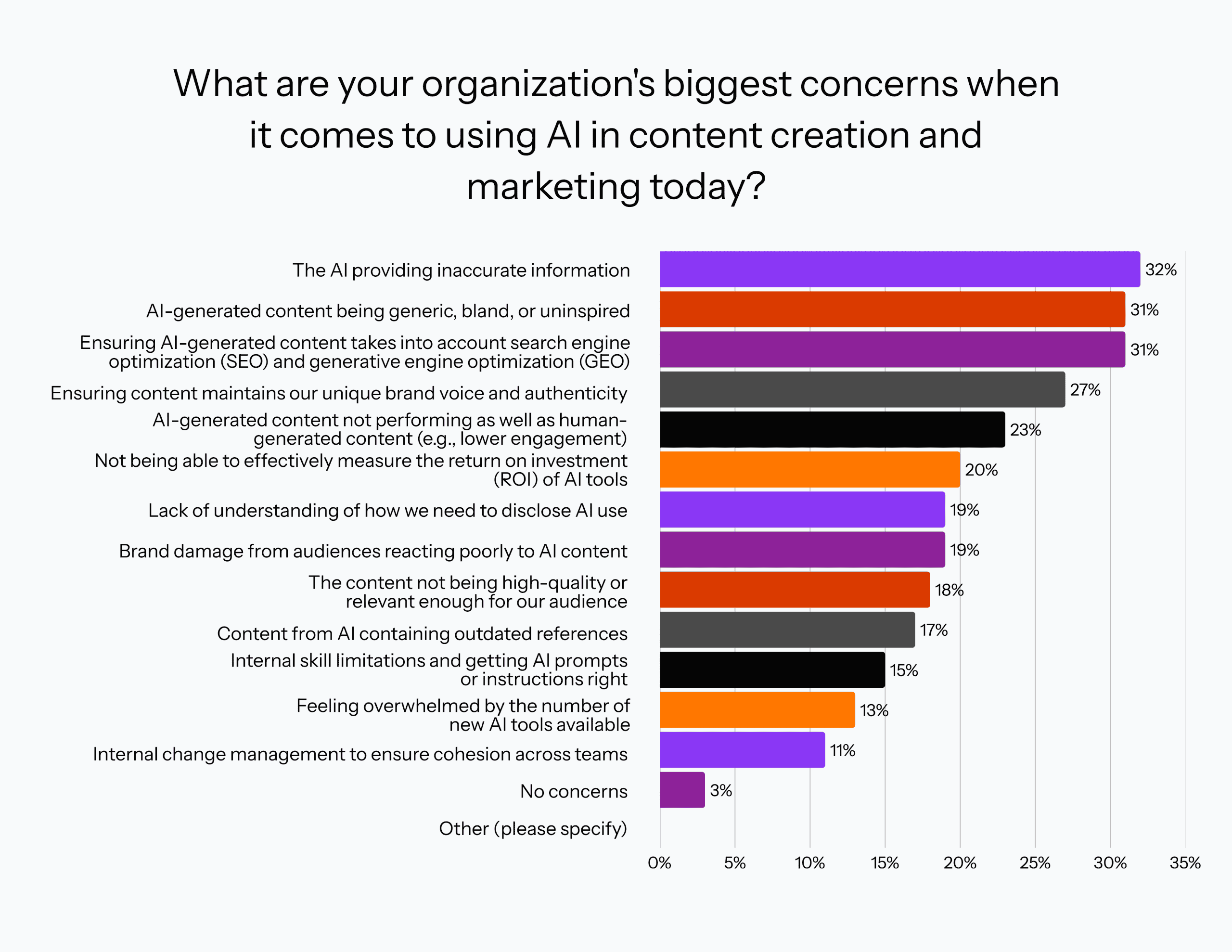
What concerns marketers about AI’s limitations
News flash: AI is not perfect, and marketers at professional services firms are rightly wary of trusting it completely:
- 32% express concern about creating authentic content that maintains brand voice
- 40% worry about ensuring content is high quality and unique
- 31% are concerned about Al-generated content being generic, bland or uninspired
- 49% struggle to keep up with new AI tools and best practices
- 32% worry that AI is providing inaccurate information
Even as we embrace AI, we hold it at arm’s length, unsure whether we can—or should—trust its outputs. Using AI and creating high-quality, authentic content are ideas in tension—Al tends to create copycat content at scale. This is healthy skepticism, and we encourage marketers to stress-test AI-created content and reports.
We still need human control and guidance.
Does AI content build trust with clients?
In professional services, thought leadership content demonstrates expertise and builds trust with current and future clients. Does AI-generated content help or hinder these efforts? Marketers seem to think it helps.
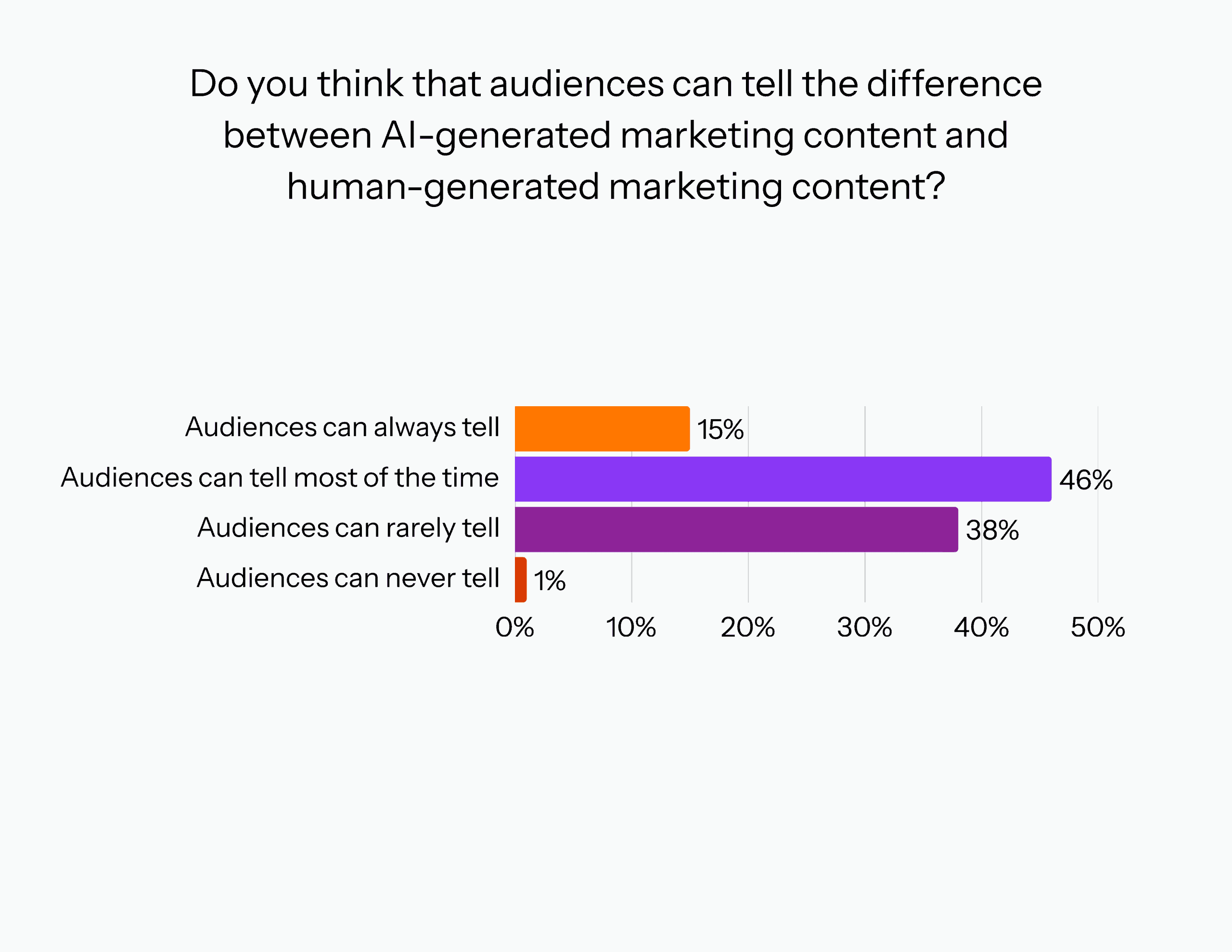
- 61% say audiences can tell when content is created by AI
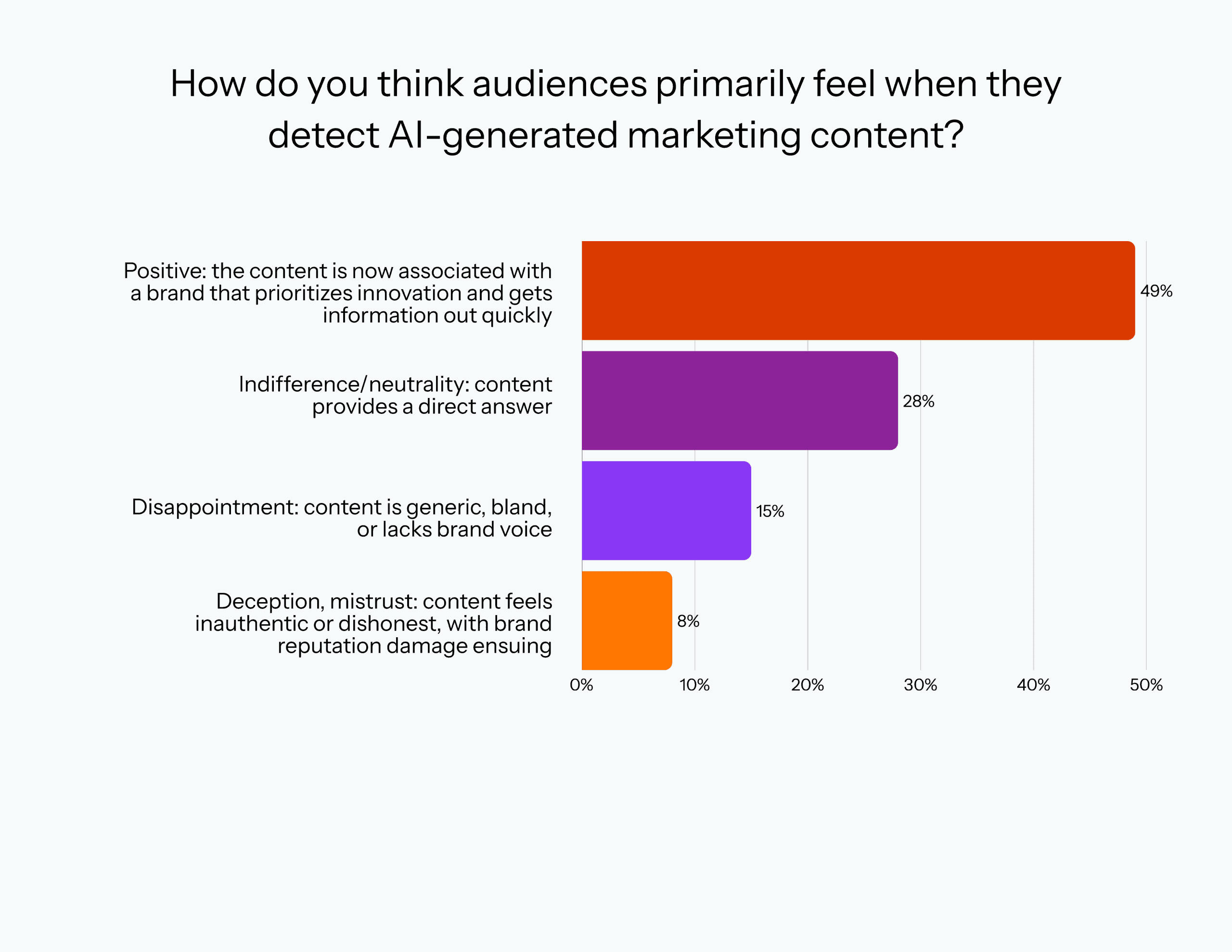
- 49% believe audiences view AI-generated content as positive, thinking it demonstrates a brand that prioritizes innovation
- 23% believe audiences view AI-generated content as a negative, harmful to their brand
We believe there is nuance to be explored here. AI-generated content can be fine, depending on what it is and where it’s deployed. But if your blog is filled with bland, AI-generated posts, you’re doing more harm than good, depending on how discerning your audience is.
How marketers are using AI to write
When ChatGPT first burst onto the scene, people leapt to the conclusion that we wouldn’t need writers anymore. That has proved to be an erroneous hot take. Instead, smart writers are using AI to kickstart and enhance their writing.
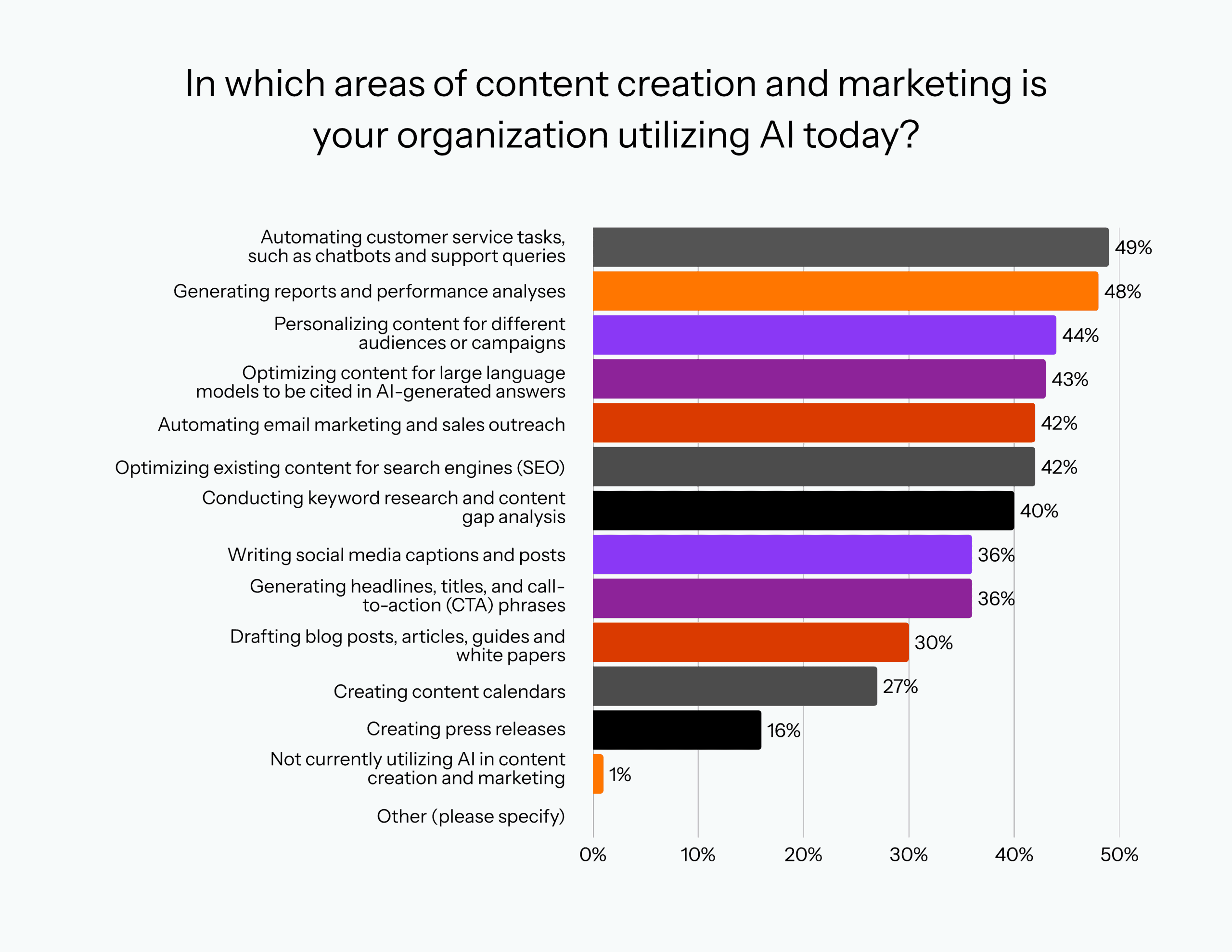
- 27% are creating content calendars
- 30% are writing blog posts, articles, guides, whitepapers, etc.
- 36% are writing social media posts
- 16% are writing press releases
One of AI’s great applications is to overcome “blank page syndrome,” something every writer has faced—that gnawing, debilitating feeling of not knowing how to start. Every good writer will tell you that a bad idea is a better place to start than no idea, and generative AI is a great way to kickstart the expression of your thoughts.
We strongly recommend using AI to draft first versions of content, and then setting AI to the side and doing a write-through. People-powered content is the only true way to stand out, especially given concerns about AI content quality and maintaining brand voice.
How marketers are using AI to extend the lifecycle of content
Too often, firms expend blood, sweat and tears to create content, and then don’t get enough value out of the hard work they’ve put in. AI can help you atomize the content you create into more useful, deliverable content types for specific audiences—and marketers are doing exactly that.
- 44% are using AI to personalize content for different audiences
- 43% are using AI to optimize content for AI search
Plugging a blog post into ChatGPT and asking it to optimize it for different audiences and channels is a smart use of AI. If your firm has five personas you’re pursuing across four channels, you can rapidly optimize the content you’ve created for each persona and each channel—suddenly, one blog post becomes 20 (or more!) content touchpoints.
How marketers are using AI to analyze data
The highest adoption rates of AI usage are tied to automation and analysis—not novel content generation. This is often the “busy work” of marketing—time-consuming tasks that don’t scale when humans are doing them.
- 48% are using AI to generate reports and perform analysis
- 49% are using AI to automate customer service tasks
- 40% are using AI to conduct content gap analysis
This shows that marketers recognize AI’s biggest advantage over you and me isn’t speed—it’s pattern recognition and synthesis.
Reference: The information in this blog post is based on these questions and answers from Scribewise’s GEO Readiness Report.